Gorilla trekking
Gorilla trekking in Uganda: the complete guide
Uganda's mountain gorillas live in two national parks in the far south-west: Bwindi Impenetrable and Mgahinga Gorilla National Park. A trek needs a Uganda Wildlife Authority permit for a fixed date. It costs US$800 per person for foreign non-residents, or US$600 in April, May and November. The permit gives you one hour with a gorilla family, in a group of no more than eight, after a forest walk that can take from a few hours to a whole day. Foreign visitors book the permit through a licensed tour operator.
Checked against official sources on . Sources
Where the gorillas are: Bwindi and Mgahinga
The Uganda Wildlife Authority (UWA) says Bwindi protects approximately 459 mountain gorillas, almost half of the world's remaining population. The park is a UNESCO World Heritage Site and is worked from four trailheads: Buhoma, Ruhija, Rushaga and Nkuringo. A permit is for one of them.
Mgahinga is Uganda's smallest national park, on the Ugandan slopes of the Virunga volcanoes. It has one habituated gorilla group and is also home to the golden monkey.
| Bwindi Impenetrable | Mgahinga Gorilla | |
|---|---|---|
| Size | 321 km² | 33.7 km² |
| Altitude | 1,160 to 2,607 metres | 2,227 to 4,127 metres |
| Where treks start | Buhoma, Ruhija, Rushaga or Nkuringo | Ntebeko Visitor Centre |
| How long a trek takes | A few hours to a whole day | Typically three to five hours |
| By road from Kampala | About 460 km to Buhoma | 524 km |
What gorilla trekking involves, and how long it takes
The day starts early at the park office. UWA's Bwindi guide gives registration at 7:30, a briefing at 8:00 and the start of tracking at 8:30; in Mgahinga, tracking starts at 8:00 from the Ntebeko Visitor Centre. You set out in a group of no more than eight with UWA guides and trackers.
Trackers go out ahead to find where the gorilla family has moved since it nested the evening before, and you walk to wherever that is. This is why nobody can tell you in advance how long the walk will be: UWA describes a Bwindi trek as lasting from a few hours to a whole day, and a Mgahinga trek as typically three to five hours.
When you reach the family you have one hour with them. Then you walk back out.
What to expect in the forest
Bwindi is dense, steep rainforest, and the trails follow the slopes. Mgahinga is bamboo and montane forest on the side of a volcano. In both, expect mud, wet vegetation and stretches with no path at all. The rules for the hour itself are UWA's, and your guides apply them.
| UWA rule | |
|---|---|
| Visitors per gorilla group | Maximum of eight |
| Time with the gorillas | One hour per group per day |
| Distance to keep | 10 metres |
| Minimum age | 15 |
| Photography | No flash |
| Eating, drinking and smoking | Not permitted during tracking |
| If you cough or sneeze | Cover your face and turn away |
| If you are unwell | Do not visit with a cold or other infectious illness |
Gorillas can catch coughs and colds from people, which is the reason for the distance and the illness rule.
Gorilla permits: what you need and what they cost
Every trekker needs their own permit, issued by UWA for one date. In Bwindi it is also for one sector of the park. UWA's tariff says the rate includes the guide fee, park entrance for the day and a community development contribution.
Foreign non-residents and visitors from the rest of Africa can book only through a licensed tour operator, and since 1 March 2026 a permit is secured only when it is paid in full.
| Residency | Normal rate | Low season |
|---|---|---|
| Foreign non-resident | US$800 | US$600 |
| Foreign resident | US$700 | US$500 |
| Rest of Africa | US$500 | — |
| East African citizen | UGX 300,000 | — |
UWA's letter of 26 February 2026 gives low-season rates for foreign non-residents and foreign residents only. Its tariff from 1 January 2027 keeps the normal gorilla permit at US$800. UWA sets these prices and can change them, so we confirm the rate with every quote.
All permit prices, Uganda and Rwanda · How permits are booked
Low season: April, May and November
In April, May and November the permit costs US$600 for foreign non-residents, US$200 less per person than the normal rate, and US$500 for foreign residents. These are wetter months, a low-season permit cannot be rescheduled once issued, and it depends on a permit being free for your date.
Fitness and preparation
You need to be able to walk for several hours on steep, uneven, often muddy ground at altitude. You do not need to be an athlete. The group moves at the pace of its slowest walker, and porters can be hired at the start of the trek to carry your daypack and give you a hand on the steep sections.
The best preparation is walking hills in the boots you will wear, with a loaded daypack, in the weeks before you travel. If you have a heart or breathing condition, speak to your doctor before booking.
What to pack for the trek
- Waterproof walking boots with good grip, already worn in.
- Long trousers and a long-sleeved top, against nettles, thorns and insects.
- Gardening-style gloves, for holding on to vegetation.
- A light rain jacket. It can rain in any month.
- A small daypack with drinking water and a packed lunch.
- A camera with the flash switched off.
- Your passport, permit and payment receipt. UWA asks trekkers to carry their permits and receipts.
The best time to go
UWA says both parks can be visited at any time of year. The drier months, June to August and December to February, give the firmest trails and are the first to sell out, so permits for those dates are booked months ahead.
April, May and November are wetter and quieter, and the permit costs less. Which suits you comes down to whether you would rather have drier trails or a lower cost.
Responsible gorilla tourism, conservation and local communities
Mountain gorillas are endangered, and the limits on a trek exist to protect them: eight visitors, one hour, ten metres, and nobody who is unwell. UWA manages both parks, sets the number of permits and their price, and provides the guides and trackers who accompany every group.
The permit is also how visitors pay for that protection. UWA's tariff states that the permit rate includes a community development contribution, and its visitor guides for Bwindi and Mgahinga state that 20% of all park fees is shared with communities in the parishes bordering the parks.
You can meet those communities directly. UWA lists community walks through the forest-edge villages at Buhoma and Nkuringo, home to Bakiga and Batwa people, and in Mgahinga Batwa guides lead visitors along the Batwa Trail.
How we organise the whole safari
Confidence Africa Tours holds Uganda Tourism Board tour operating licence UTB/RTT/TO/2024/101156. We check permit availability for your dates first, choose the park and sector that fit your route and how much walking you want, and secure the permit. Then we build the rest around it: a lodge close to your trailhead the night before, the driver-guide and vehicle, and the other parks you want to see.
A gorilla trek combines well with chimpanzee tracking in Kibale, game drives in Queen Elizabeth or Murchison Falls, or a few days in Rwanda.
Safaris with a gorilla trek · How many days to allow · What a Uganda safari costs
Common questions
- How much does gorilla trekking cost in Uganda?
- The gorilla permit is US$800 per person for foreign non-residents and US$700 for foreign residents, or US$600 and US$500 in April, May and November. It is set by the Uganda Wildlife Authority. The rest of the cost is the safari around it: transport, lodges and the days on the route.
- Where can you see gorillas in Uganda?
- In Bwindi Impenetrable National Park and Mgahinga Gorilla National Park, both in the far south-west. Bwindi has four trailheads (Buhoma, Ruhija, Rushaga and Nkuringo); Mgahinga has one habituated gorilla group, tracked from Ntebeko.
- How long does a gorilla trek take?
- UWA describes a Bwindi trek as lasting from a few hours to a whole day and a Mgahinga trek as typically three to five hours, depending on where the family moved overnight. The time with the gorillas is one hour.
- What is the minimum age for gorilla trekking in Uganda?
- 15.
- Can I book a Uganda gorilla permit myself?
- Not as a foreign visitor. UWA's tariff says permits for foreign non-residents and visitors from the rest of Africa can only be booked through licensed tour operators.
- What will a Uganda gorilla permit cost in 2027?
- UWA's tariff taking effect on 1 January 2027 keeps the gorilla permit at US$800 for foreign non-residents and US$700 for foreign residents. The gorilla habituation experience rises from US$1,500 to US$1,800. UWA can revise its tariff, so we confirm the rate when we quote.
- Is Bwindi or Mgahinga better for gorilla trekking?
- Bwindi has far more gorilla families and four trailheads, so there is more choice of date and of how much walking you do. Mgahinga has one group, shorter treks on UWA's figures, and the Virunga volcanoes as a backdrop. We suggest one or the other from your route and dates.
Safaris to start from
6 Days Bwindi Gorilla Trekking
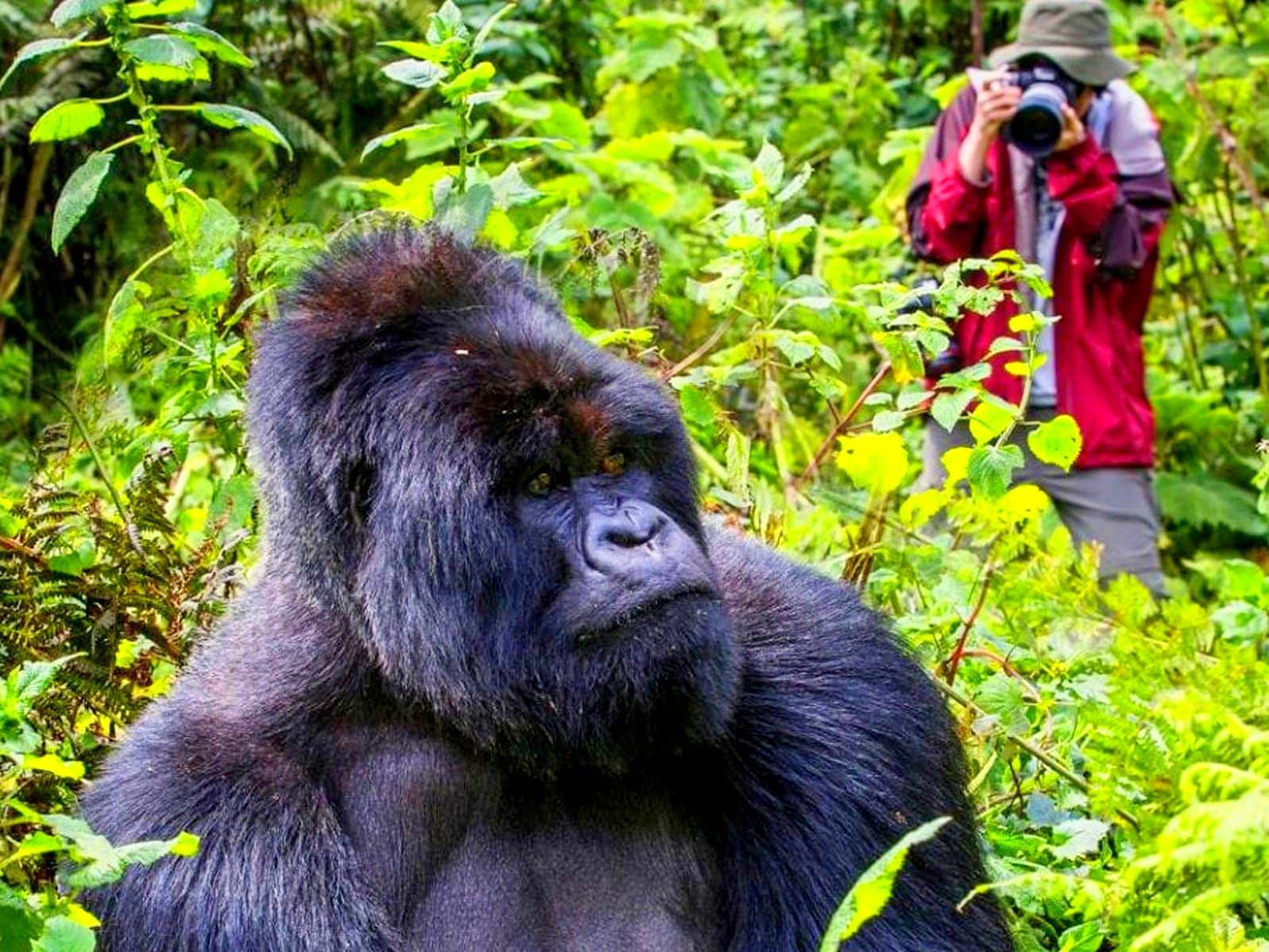
A six-day safari through southwestern Uganda and into Rwanda, combining mountain gorilla tracking in Bwindi with a game drive and Kazinga Channel boat safari in Queen Elizabeth. It ends with a visit to Kigali's Genocide Memorial.
6-Day Uganda Wildlife & Gorilla Safari
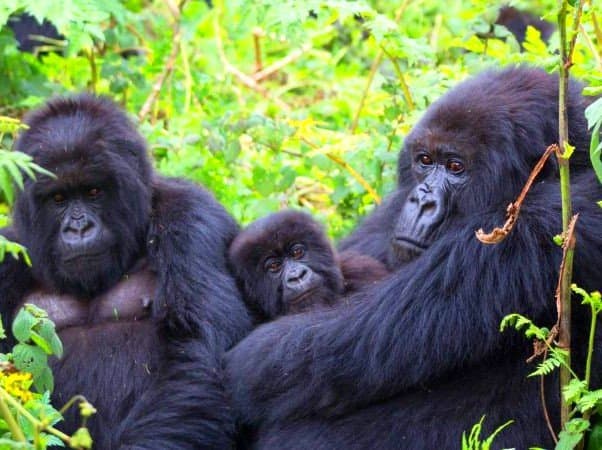
A six-day Uganda safari across Murchison Falls, Queen Elizabeth and Bwindi national parks, with game drives, the top of the falls, a Kazinga Channel boat cruise and mountain gorilla trekking.
11 Day Uganda Safari
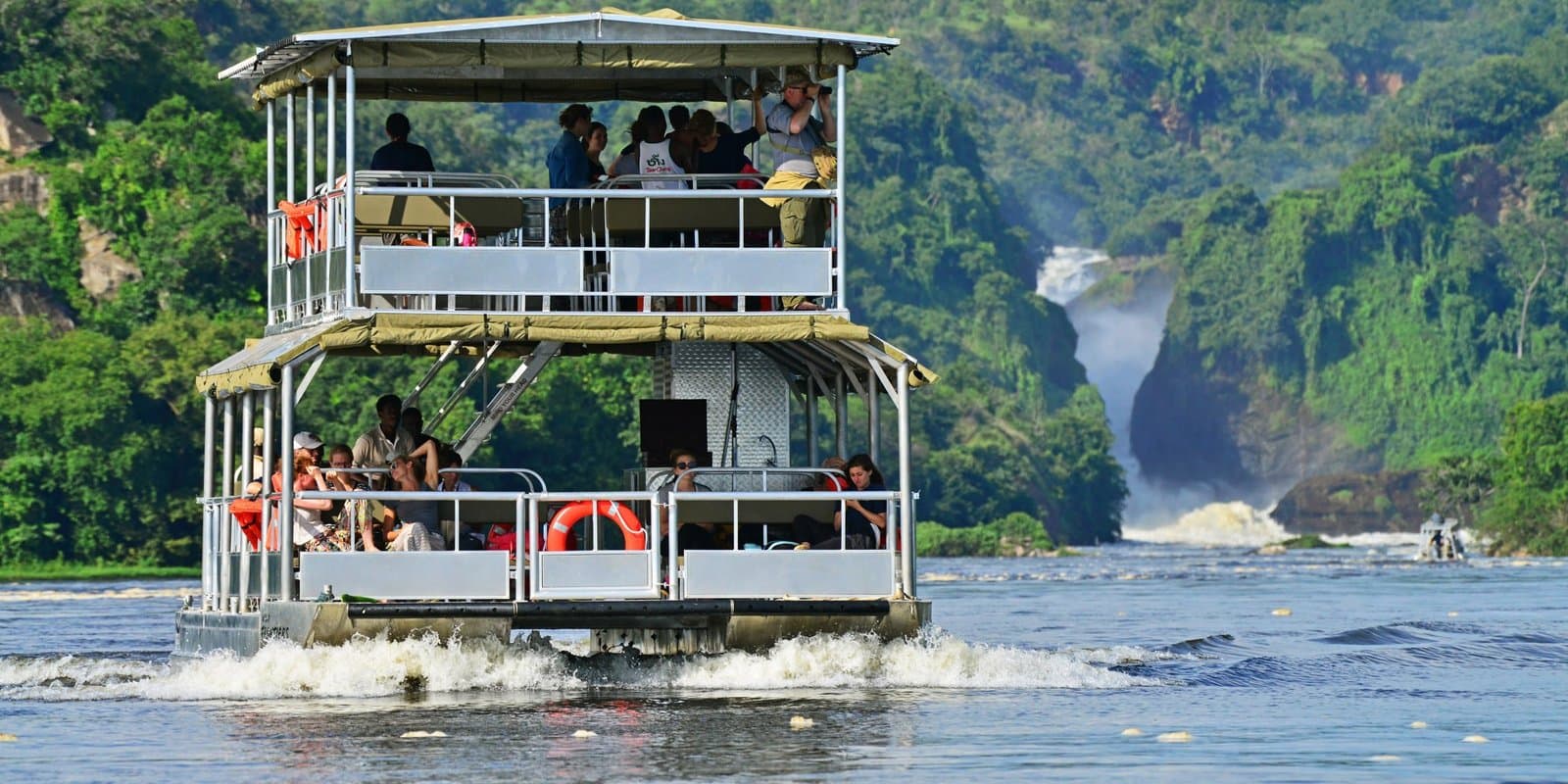
An eleven-day Uganda safari covering Ziwa rhinos, Kibale chimpanzees, Queen Elizabeth, Bwindi gorillas, Lake Bunyonyi and Lake Mburo. It begins and ends at Entebbe with a stop at the Equator.
Sources
Every fact on this page was checked on against these sources. Gorilla permit prices are set by the Uganda Wildlife Authority and change when it publishes a new tariff or a promotional rate. UWA's visitor guides for the two parks predate the current tariff, so your guide confirms start times the day before. Packing and preparation advice is ours.
- Uganda Wildlife Authority — Tariff changes 2026–2027, letter of 26 February 2026 (PDF)
- Uganda Wildlife Authority — Conservation Tariff, July 2024 to June 2026 (PDF)
- Uganda Wildlife Authority — Bwindi Impenetrable National Park
- Uganda Wildlife Authority — Bwindi visitor brochure (PDF)
- Uganda Wildlife Authority — Mgahinga Gorilla National Park
- Uganda Wildlife Authority — Mgahinga visitor brochure (PDF)
Planning questions
Planning to trek Uganda's mountain gorillas?
Contact Confidence Africa Tours for current permit availability, personalised itineraries and complete Uganda safari packages.