

Gorilla trekking
What happens on a gorilla trekking day?
You report to the park office early for registration and a briefing — 7:00 in Rwanda, from 7:30 in Uganda's Bwindi — then set out in a group of no more than eight with ranger guides and trackers. The walk to the gorilla family can take anything from half an hour to most of the day, because the family moves overnight. When you reach them you have one hour in their company, keeping your distance, before walking back out.
Checked against official sources on . Sources
Before you set out
Uganda Wildlife Authority's Bwindi guide gives registration at 7:30, the briefing at 8:00 and the start of tracking at 8:30. In Mgahinga, tracking starts daily at 8:00 from the Ntebeko Visitor Centre. In Rwanda, you present yourself for the briefing at the park offices in Kinigi, Volcanoes National Park, at 7:00.
In Bwindi, a permit is for one sector of the park, and UWA fines half the permit fee for tracking somewhere other than the location on the permit. Arriving at the right trailhead matters, which is why the night before is spent close to it.
The walk in
Every gorilla and chimpanzee trek in Uganda is accompanied by UWA guides and trackers. The trackers go out ahead to find where the family has moved to, which is why nobody can tell you in advance how long the walk will be.
UWA describes a Bwindi trek as lasting from a few hours to a whole day, and a Mgahinga trek as typically three to five hours. RDB puts the walk in Rwanda at 30 minutes to more than four hours to reach the family, with the return often taking as long.
Porters can carry your daypack. RDB describes this as a small charge; neither authority publishes a set rate.
The hour with the gorillas
Both countries limit visits to one hour with a family per day and eight visitors per group. The rules are close but not identical — the distance you keep is the clearest difference.
| Uganda (UWA) | Rwanda (RDB) | |
|---|---|---|
| Visitors per family | Maximum of 8 | Maximum of 8 |
| Time with the family | One hour | One hour |
| Distance to keep | 10 metres | 7 metres |
| Minimum age | 15 | 15 |
| Photography | No flash | No flash |
| If you cough or sneeze | Cover your face and turn away | Cover your mouth and turn away |
| If you are unwell | Do not visit with a cold or other infectious illness | You may be denied access with a cold, flu or other contagious illness |
Gorillas are susceptible to human illnesses, which is why both authorities turn away visitors who are unwell.
If the family cannot be found
In Rwanda, RDB's policy is that if the whole day is lost because the group moved, you get another chance or a full refund, and if you tracked all day without making contact, 75% is refunded.
Uganda Wildlife Authority does not publish a policy for this. We confirm the terms that apply to your permit when we book it.
Common questions
- How long does gorilla trekking take?
- The walk to the family varies with where it moved overnight. UWA describes Bwindi treks as a few hours to a whole day and Mgahinga treks as typically three to five hours; RDB gives 30 minutes to more than four hours in Rwanda, with the walk back often as long. The time with the gorillas is one hour in both countries.
- How close do you get to the gorillas?
- The rule is 10 metres in Uganda and 7 metres in Rwanda. Your guides keep the group at the right distance.
- How many people are in a gorilla trekking group?
- No more than eight visitors per gorilla family per day, in both Uganda and Rwanda.
- Can I take photographs of the gorillas?
- Yes, but without flash. Both UWA and RDB prohibit flash photography.
- What happens if I am ill on the day?
- UWA asks visitors not to track with a cold or other infectious illness, and RDB may deny access to anyone with a cold, flu or other contagious illness, because gorillas can catch human diseases.
- What is the minimum age for gorilla trekking?
- 15, in both Uganda and Rwanda.
Safaris to start from
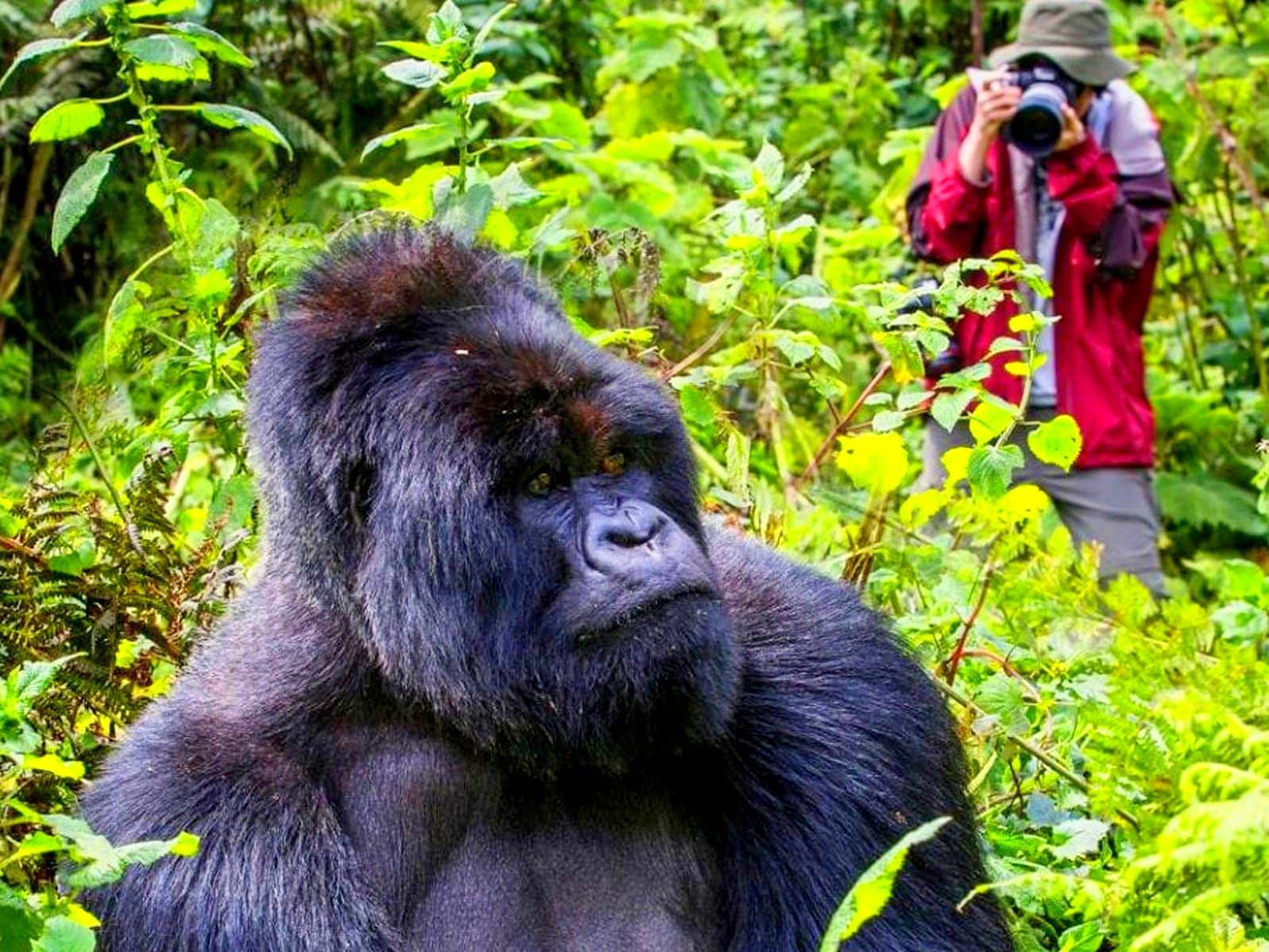
6 Days Bwindi Gorilla Trekking
A six-day safari through southwestern Uganda and into Rwanda, combining mountain gorilla tracking in Bwindi with a game drive and Kazinga Channel boat safari in Queen Elizabeth. It ends with a visit to Kigali's Genocide Memorial.
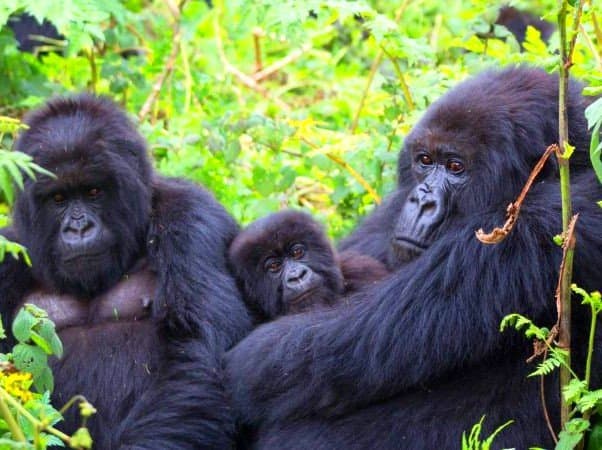
6-Day Uganda Wildlife & Gorilla Safari
A six-day Uganda safari across Murchison Falls, Queen Elizabeth and Bwindi national parks, with game drives, the top of the falls, a Kazinga Channel boat cruise and mountain gorilla trekking.
3 Days Kigali — Rwanda Apes Tour
A three-day Rwanda tour combining Kigali's historical and cultural sites with mountain gorilla trekking in Volcanoes National Park. The final day offers a choice between golden monkey trekking and a Mount Bisoke hike.
Sources
Every fact on this page was checked on against these sources. UWA's published Bwindi and Mgahinga start times come from its visitor brochures, which predate the current tariff — your guide will confirm the time for your sector the day before.
- Uganda Wildlife Authority — Conservation Tariff, July 2024 to June 2026 (PDF)
- Uganda Wildlife Authority — Guidelines for gorilla and chimpanzee tracking, July 2024 (PDF)
- Uganda Wildlife Authority — Bwindi visitor brochure (PDF)
- Uganda Wildlife Authority — Mgahinga visitor brochure (PDF)
- Rwanda Development Board — Mountain gorilla tracking (booking portal)
- Visit Rwanda — Gorilla tracking
Planning questions
Planning a gorilla trek?
Tell us your dates and how much walking you want to do, and we will work out the park, the sector and where to stay the night before.