

Gorilla trekking
How fit do you need to be for gorilla trekking?
Fit enough for a long day of steep, often muddy walking at altitude. Bwindi lies between 1,160 and 2,607 metres and a trek there can last from a few hours to a whole day; in Rwanda's Volcanoes National Park the gorillas live between 2,500 and 4,000 metres and the walk to them takes from 30 minutes to more than four hours, with the return often as long. You do not need to be an athlete — porters can carry your pack — but regular walking in the weeks before makes a real difference.
Checked against official sources on . Sources
Altitude and trek length, by park
| Park | Altitude | How long the trek takes |
|---|---|---|
| Bwindi Impenetrable, Uganda | 1,160 to 2,607 metres | A few hours to a whole day |
| Mgahinga, Uganda | 2,227 metres at the Ntebeko park headquarters, rising to 4,127 metres on Mount Muhavura | Typically three to five hours |
| Volcanoes National Park, Rwanda | Gorillas live between 2,500 and 4,000 metres | 30 minutes to more than four hours to reach the family; the return can take as long |
What makes it hard
- Nobody knows the distance until the day. Trackers set out first to find where the family moved overnight, and you walk to wherever that is.
- The ground is steep and often wet. Bwindi's forest is dense and the trails follow the slopes rather than contouring around them.
- Altitude. Bwindi starts at 1,160 metres and Rwanda's gorillas live above 2,500, so most visitors breathe harder on the climbs than they would at sea level.
What makes it easier
- Porters. You can hire a porter at the start of the trek to carry your daypack and give you a hand on the steep sections. RDB describes this as a small charge; neither authority publishes a rate.
- Choosing the family, or the sector. In Rwanda, families are allocated on the day according to fitness. In Uganda, a Bwindi permit is for one sector, so we choose the sector with the amount of walking you want in mind when we book it.
- Time. There is no prize for speed. The group moves at the pace of its slowest walker.
- Carrying services. For visitors with limited mobility, carrying services exist in some parks and have to be arranged in advance. Neither UWA nor RDB publishes them, so ask us and we will confirm what is available for your date and sector.
Getting ready
The best preparation is walking hills with a loaded daypack in the boots you will wear. Waterproof boots with grip, long sleeves and trousers, gardening-style gloves for holding on to vegetation, and a light rain jacket are what the forest asks for.
Common questions
- Do you need to be very fit to see gorillas?
- No, but you need to be able to walk for several hours on steep, uneven, often muddy ground at altitude. The trek length depends on where the family is that day, from under an hour to most of the day.
- Is there an age limit for gorilla trekking?
- The minimum age is 15 in both Uganda and Rwanda. Neither authority publishes a maximum age.
- Can I hire a porter?
- Yes. Porters are available at the start of the trek to carry your daypack. RDB describes the cost as a small charge; neither authority publishes a set rate.
- Can I go gorilla trekking with limited mobility?
- Carrying services exist in some parks for visitors who cannot walk the distance, and they must be arranged in advance. Neither authority publishes the service or its cost, so we confirm what is available for your date and park before booking.
- Is the altitude a problem?
- The parks range from about 1,160 metres in Bwindi to 4,000 metres in the upper reaches of Volcanoes National Park. Most visitors notice it on the climbs rather than at rest. If you have a heart or breathing condition, speak to your doctor before booking.
Safaris to start from
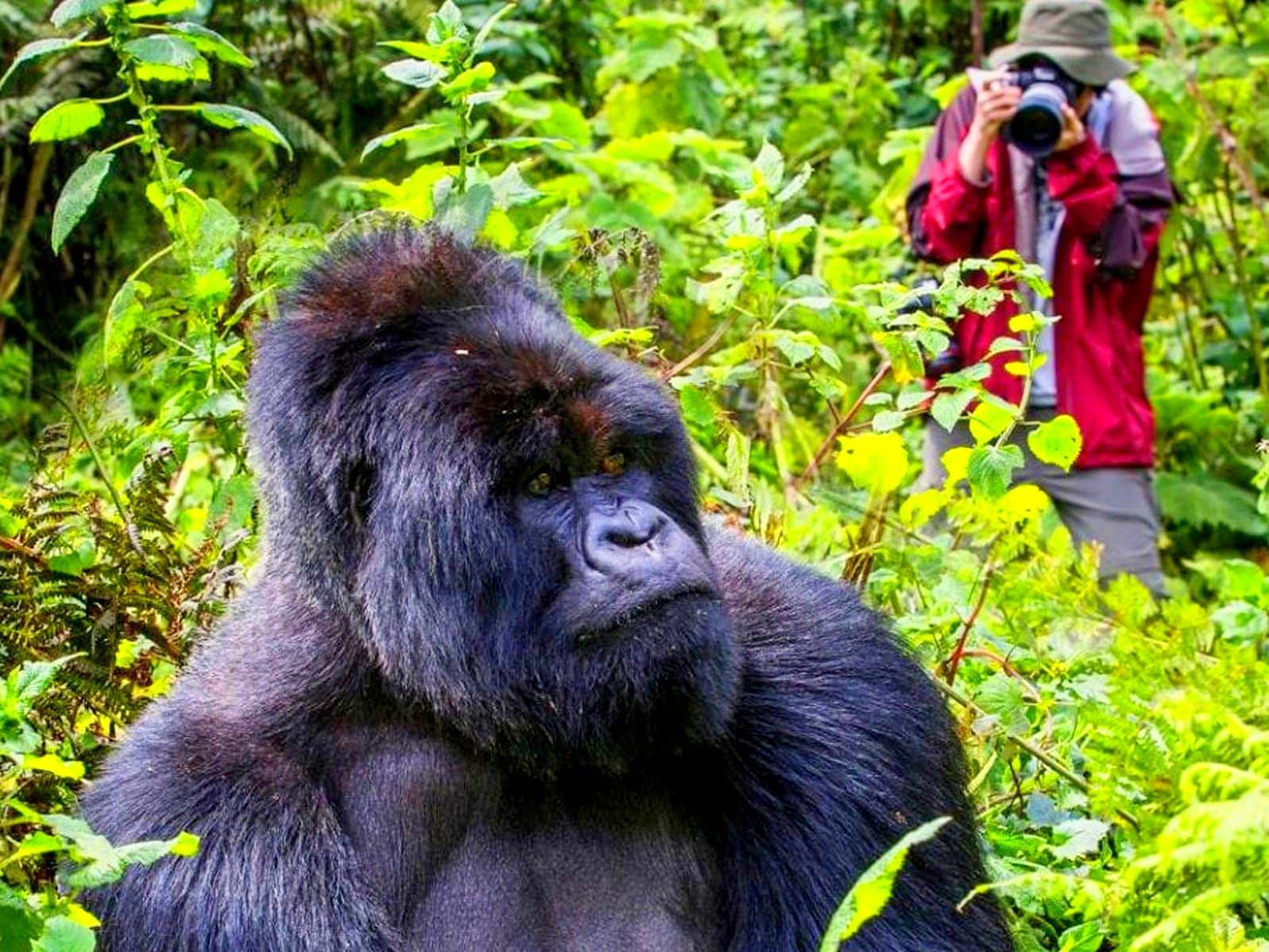
6 Days Bwindi Gorilla Trekking
A six-day safari through southwestern Uganda and into Rwanda, combining mountain gorilla tracking in Bwindi with a game drive and Kazinga Channel boat safari in Queen Elizabeth. It ends with a visit to Kigali's Genocide Memorial.
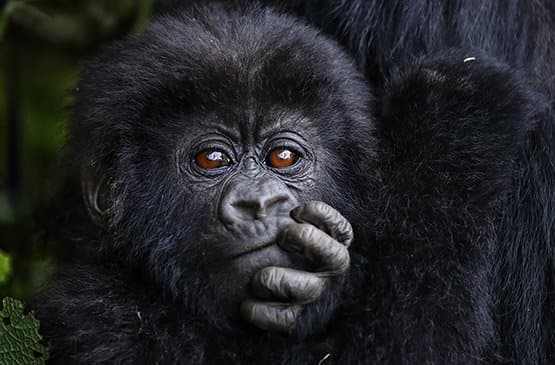
8-Day Rwanda Gorillas and Chimps Safari
An eight-day Rwanda journey that pairs chimpanzee tracking in Nyungwe with gorilla trekking in the Volcanoes, alongside Lake Kivu and cultural stops. It runs from Kigali across the south and northwest of the country.
3 Days Kigali — Rwanda Apes Tour
A three-day Rwanda tour combining Kigali's historical and cultural sites with mountain gorilla trekking in Volcanoes National Park. The final day offers a choice between golden monkey trekking and a Mount Bisoke hike.
Sources
Every fact on this page was checked on against these sources. Rules change on the authorities’ schedule, not ours, so confirm anything time-sensitive before you travel.
- Uganda Wildlife Authority — Bwindi Impenetrable National Park
- Uganda Wildlife Authority — Bwindi visitor brochure (PDF)
- Uganda Wildlife Authority — Mgahinga visitor brochure (PDF)
- Rwanda Development Board — Mountain gorilla tracking (booking portal)
- Visit Rwanda — Gorilla tracking
- Visit Rwanda — Volcanoes National Park
Planning questions
Not sure which trek suits you?
Tell us how much walking you are comfortable with and we will suggest the park and sector that fit — or a chimpanzee trek instead.